In another corner of the world, engineers were training billion-parameter AI models inside silent data centers glowing with blue server lights. Researchers were building multilingual AI systems, startups were racing to deploy autonomous agents, and governments were investing billions into becoming global AI leaders. The world appeared to be entering an age where Artificial Intelligence would define the next century.
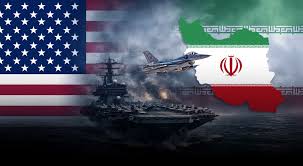
Then, thousands of kilometers away, tensions between the United States and Iran escalated.
At first, many viewed it as yet another geopolitical flashpoint in the Middle East — distant from the world of algorithms, GPUs, and neural networks. But slowly, the global technology ecosystem began realizing something deeper: modern AI does not live in isolation from geopolitics. It depends on energy routes, semiconductor supply chains, rare materials, undersea cables, cloud infrastructure, cyber stability, and global trade networks.
And suddenly, the future of AI began intersecting with the uncertainty of war.
As fears around instability in the Strait of Hormuz increased, oil markets reacted immediately. Energy prices surged. For ordinary industries, this meant inflation and logistical disruption. But for AI companies, the consequences were even larger. Every advanced AI model today runs on massive data centers consuming enormous amounts of electricity. Training a frontier AI model requires thousands of high-performance GPUs operating continuously for weeks or months. Rising energy prices meant rising AI costs.
Inside boardrooms of major technology firms, calculations changed overnight.
The cost of running AI infrastructure began increasing. Expansion plans for hyperscale data centers slowed. Countries dependent on imported energy started reconsidering the economics of large-scale AI deployment. Smaller startups that were already struggling with compute costs suddenly found the future even more uncertain.
But energy was only one side of the story.
The modern AI race is built on semiconductors — perhaps the most strategic resource of the digital age. Advanced chips require globally distributed supply chains involving rare gases, specialized chemicals, precision manufacturing equipment, shipping routes, and tightly interconnected logistics systems. Any instability in global trade corridors creates ripple effects across the AI ecosystem.
Soon, discussions shifted from innovation to resilience.
Governments across the world began asking difficult questions:
- What happens if global chip supplies are disrupted?
- Can nations rely entirely on foreign AI infrastructure?
- Should sovereign AI capabilities become part of national security?
- Is AI now as strategic as energy or defense?
The answers were changing rapidly.
For countries like India, the conflict became both a warning and an opportunity. Policymakers increasingly recognized that the future could not depend entirely on imported compute infrastructure or external AI ecosystems. Conversations around indigenous semiconductor manufacturing, sovereign cloud infrastructure, multilingual AI, and public digital platforms became more urgent than ever before.
The world also witnessed another transformation — AI itself becoming part of modern warfare.
Cybersecurity agencies reported growing concerns around AI-enabled cyberattacks, automated misinformation campaigns, deepfake propaganda, and autonomous defense systems. Wars were no longer fought only on borders. They were increasingly fought across data networks, satellite systems, financial infrastructure, and information ecosystems.
Artificial Intelligence was no longer merely a commercial technology. It had become geopolitical infrastructure.
Meanwhile, global technology alliances started shifting. Countries began forming strategic AI partnerships similar to energy or military alliances. Export restrictions on advanced AI chips intensified. Nations accelerated investments into domestic AI models and trusted digital ecosystems. The world slowly moved toward an era where AI ecosystems might split into geopolitical blocs.
Ironically, the conflict may ultimately accelerate innovation rather than slow it completely.
History has often shown that periods of geopolitical instability force nations to build stronger domestic capabilities. Just as space programs, telecommunications, and semiconductor industries evolved during earlier geopolitical rivalries, AI too may enter a phase driven by strategic national priorities.
But the larger lesson emerging from the crisis is profound.
For years, AI was discussed mainly as a technological revolution — about automation, productivity, startups, and innovation. The U.S.–Iran tensions revealed something bigger: the future of AI is inseparable from global stability, energy security, supply chains, diplomacy, and national strategy.
The next era of Artificial Intelligence will not be shaped only by scientists and engineers.
It will also be shaped by geopolitics.