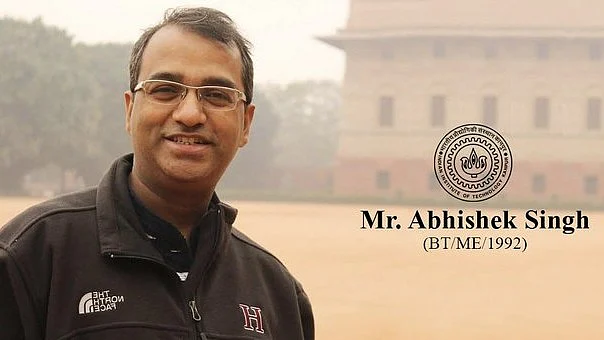
India’s journey toward becoming a global leader in artificial intelligence has been shaped by visionaries who understand both technology and governance. Among them, Abhishek Singh stands out as a key figure who helped translate ambition into execution. His recent transition from the AI ecosystem to a new leadership role marks an important moment in India’s digital evolution.
Over the past few years, Singh played a pivotal role within the Ministry of Electronics and Information Technology (MeitY), where he led efforts that laid the foundation for the IndiaAI Mission. His work was not limited to policy formulation; it extended deeply into implementation, ensuring that India’s AI ambitions were grounded in scalable and inclusive systems. Under his leadership, AI in India was positioned not merely as a tool for innovation, but as an enabler of public good.
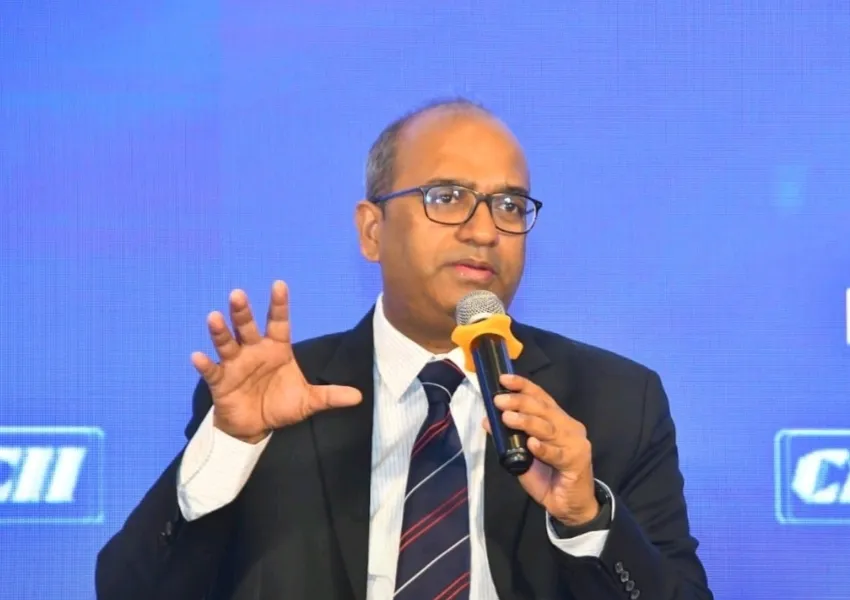
One of the defining aspects of his contribution was strengthening India’s digital public infrastructure under the broader Digital India initiative. Programs such as Bhashini, which aim to bridge the country’s linguistic diversity through AI, gained momentum as part of this ecosystem. His approach emphasized accessibility—ensuring that technology reaches citizens across languages, geographies, and levels of digital literacy.
Singh’s leadership style was rooted in execution. As Director General of the National Informatics Centre (NIC), he oversaw large-scale government technology platforms that serve millions of users daily. This experience allowed him to bring a systems-level perspective to AI—focusing on reliability, scalability, and governance. Rather than treating AI as an isolated innovation track, he integrated it into the broader framework of national digital infrastructure.
In a recent administrative reshuffle, Singh has taken on a new responsibility as Director General of the National Testing Agency (NTA). While this may appear to be a shift from AI to education, the underlying challenges remain closely aligned. Both domains demand systems that can operate at national scale, maintain trust and transparency, and handle vast amounts of data securely.
His transition comes at a time when examination systems in India are under increasing pressure to evolve. Issues of scale, fairness, and technological integrity are central to the functioning of NTA. Singh’s experience in building robust digital platforms and managing high-impact public systems positions him well to address these challenges. There is growing expectation that his leadership will bring greater digitization, improved transparency, and possibly the integration of AI-driven solutions in assessment and evaluation processes.
For India’s AI ecosystem, his departure from MeitY does not signal a slowdown but rather a shift in leadership. The structures, programs, and collaborations he helped establish continue to function and expand. Initiatives under IndiaAI and platforms like Bhashini are now part of a broader, institutionalized framework that will carry forward the mission.
Abhishek Singh’s journey reflects a larger narrative in India’s governance—where technology is increasingly seen as a public utility rather than a privilege. His work has consistently demonstrated that innovation at scale must be inclusive, accountable, and aligned with national priorities.
As he steps into his new role, the focus now shifts from building AI ecosystems to strengthening the backbone of India’s examination infrastructure. Yet, the common thread remains unchanged: leveraging technology to serve citizens more effectively.
In many ways, this transition is not a departure but a continuation—an extension of the same philosophy applied to a new domain. From shaping India’s AI ambitions to redefining its examination systems, Abhishek Singh’s contributions continue to lie at the intersection of technology, scale, and nation-building.