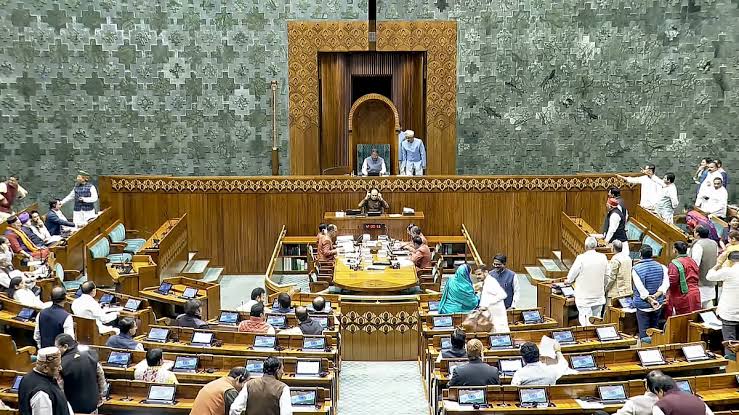
India is building AI systems capable of processing billions of data points, predicting complex patterns and automating increasingly sophisticated tasks. But perhaps AI can also help us answer a much simpler democratic question: How effectively is Parliament using its time?
The Monsoon Session of Parliament 2026, scheduled from 20 July to 13 August across 19 sittings, provides an interesting case for such analysis.
Instead of analysing parliamentary performance merely through political commentary, Artificial Intelligence can examine measurable indicators—actual sitting time, adjournments, Question Hour utilisation, legislative debate, interruptions, speeches, topics discussed and time lost to disruptions.
And the early picture from the 2026 Monsoon Session deserves attention.
Parliament Was Scheduled to Work. Politics Had Other Plans.
The opening days of the session witnessed repeated disruptions as Opposition parties raised issues including the NEET paper-leak controversy and demanded accountability from the government.
Reports indicate that both Houses were unable to conduct substantive business during the first three days of the session. On the fourth day, proceedings were again disrupted and adjourned.
The first day itself saw Lok Sabha being adjourned repeatedly amid sloganeering, with the House ultimately unable to transact scheduled business.
This is where AI-based parliamentary analytics can move the conversation away from political rhetoric and towards measurable evidence.
Imagine an AI dashboard analysing every minute of Parliament and categorising it as:
Productive Debate | Question Hour | Legislative Business | Government Response | Opposition Intervention | Protest/Sloganeering | Adjournment | Procedural Business
The citizen would then see not simply who shouted the loudest, but where parliamentary time actually went.
The Real Cost Is Not Just Hours Lost
When Parliament is repeatedly adjourned, we often calculate the loss in hours or financial terms.
That understates the problem.
Every hour lost potentially means fewer questions answered by Ministers, fewer constituency issues raised by MPs, less scrutiny of legislation, shorter discussions on government expenditure and fewer opportunities for the Opposition itself to place its arguments formally on record.
Parliamentary disruption therefore creates an interesting paradox.
The Opposition’s constitutional role is to question the Government. But when protest prevents the House from functioning, the Opposition can simultaneously lose the very institutional platform designed to make the Government answer those questions.
Protest is unquestionably part of parliamentary politics. Disagreement is fundamental to democracy. Governments must also provide adequate opportunities for issues of public importance to be debated.
But disruption becoming the default instrument of parliamentary strategy deserves scrutiny regardless of which political party occupies the Opposition benches.
Protest Versus Parliamentary Accountability
The NEET controversy demonstrates this tension particularly well.
Opposition parties had legitimate political and parliamentary space to demand explanations, investigations and accountability.
Yet prolonged disruption contributed to a parliamentary logjam. Eventually, government and Opposition representatives reached an understanding enabling discussion on the Public Examinations (Prevention of Unfair Means) Amendment Bill, 2026, with six hours reportedly earmarked for debate.
That itself raises an important question:
If political disagreement ultimately has to return to parliamentary debate, why should Parliament first lose days of legislative time?
A strong Opposition does not merely stop legislation.
A strong Opposition interrogates it, challenges its assumptions, proposes amendments, exposes weaknesses and forces Ministers to defend policy publicly.
That record becomes part of parliamentary history.
Sloganeering disappears when television cameras move on.
A well-argued parliamentary intervention remains permanently on record.
What AI Can Tell Citizens
This is where AI could fundamentally change parliamentary transparency.
Speech recognition combined with language models, computer vision, parliamentary metadata and analytical models could automatically generate a Parliament Productivity Index after every sitting.
Instead of reducing performance to attendance, citizens could see indicators such as:
Actual House Running Time: How long did Parliament actually function?
Disruption Index: How much scheduled time disappeared because of interruptions and adjournments?
Question Hour Efficiency: How many listed questions received oral answers?
Debate Depth Score: How much meaningful discussion occurred before legislation was passed?
Participation Index: Which MPs actually participated in substantive parliamentary proceedings?
Issue Diversity: Were discussions concentrated around political controversies or did MPs raise constituency, economic, social and governance issues?
Government Accountability Score: How many parliamentary questions and interventions received substantive ministerial responses?
Legislative Scrutiny Score: How much examination did Bills receive before passage?
Most importantly, AI could analyse these indicators without caring whether an MP belongs to the Government or Opposition.
The metric should remain the same.
From Sansad TV to Sansad Intelligence
India already produces enormous volumes of parliamentary data—video proceedings, debates, questions, answers, Bills, committee reports, bulletins and other legislative documents.
AI can transform this archive from information into intelligence.
Automatic Speech Recognition can convert proceedings into searchable transcripts.
Natural Language Processing can identify topics and policy areas.
Large Language Models can summarise debates and compare arguments.
Speaker diarisation can calculate how much individual MPs participated.
Computer vision and event detection could assist in identifying interruptions and adjournments when combined with official parliamentary records.
Analytics could then calculate how parliamentary time was distributed.
A citizen could simply ask:
“How many hours did Lok Sabha actually function during the Monsoon Session?”
“How much time was lost because of disruptions?”
“Which Bills received the longest debate?”
“Which MPs asked the most substantive questions?”
“What percentage of Question Hour was actually utilised?”
“Which ministries faced the highest number of questions?”
AI could answer within seconds using the parliamentary record.
Democracy Needs Debate, Not Silence
The objective should not be to use AI to label the Government as productive or the Opposition as disruptive.
That would turn technology into another political instrument.
The more valuable objective is to create an objective digital mirror of parliamentary behaviour.
If the Government avoids answering questions, the data should show it.
If legislation is passed without adequate debate, the data should show it.
If Opposition protests repeatedly prevent Question Hour or legislative discussion, the data should show that too.
And if MPs across party lines engage in substantive debate, citizens should be able to recognise them.
That is the real opportunity.
AI Could Become Parliament’s Most Neutral Observer
India frequently speaks about AI transforming governance.
Perhaps one of its most powerful applications will be surprisingly simple:
measuring governance itself.
Parliament should remain noisy. Democracy requires disagreement.
But there is an important difference between noise produced by debate and noise that prevents debate from happening.
The Monsoon Session 2026 reminds us why that distinction matters.
India does not need a Parliament without Opposition.
It needs a Parliament with a powerful Opposition that questions, debates, scrutinises and challenges the Government—and a Government that remains present and accountable enough to answer those challenges.
AI can help citizens measure whether both sides are performing those responsibilities.
Because ultimately, the most important parliamentary metric isn’t how many political points were scored.
It is how many productive hours were spent working for the people of India.
MonsoonSession2026 #IndianParliament #Parliament #LokSabha #RajyaSabha #ArtificialIntelligence #AI #AIForGovernance #AIInParliament #ParliamentaryAnalytics #DigitalParliament #DigitalSansad #ParliamentProductivity #ParliamentaryReforms #ParliamentaryDebate #Democracy #DemocraticAccountability #GoodGovernance #GovernmentAccountability #Opposition #QuestionHour #LegislativeReforms #PolicyMaking #DigitalGovernance #GovTech #DigitalIndia #DataDrivenGovernance #ResponsibleAI #Transparency #Sansad