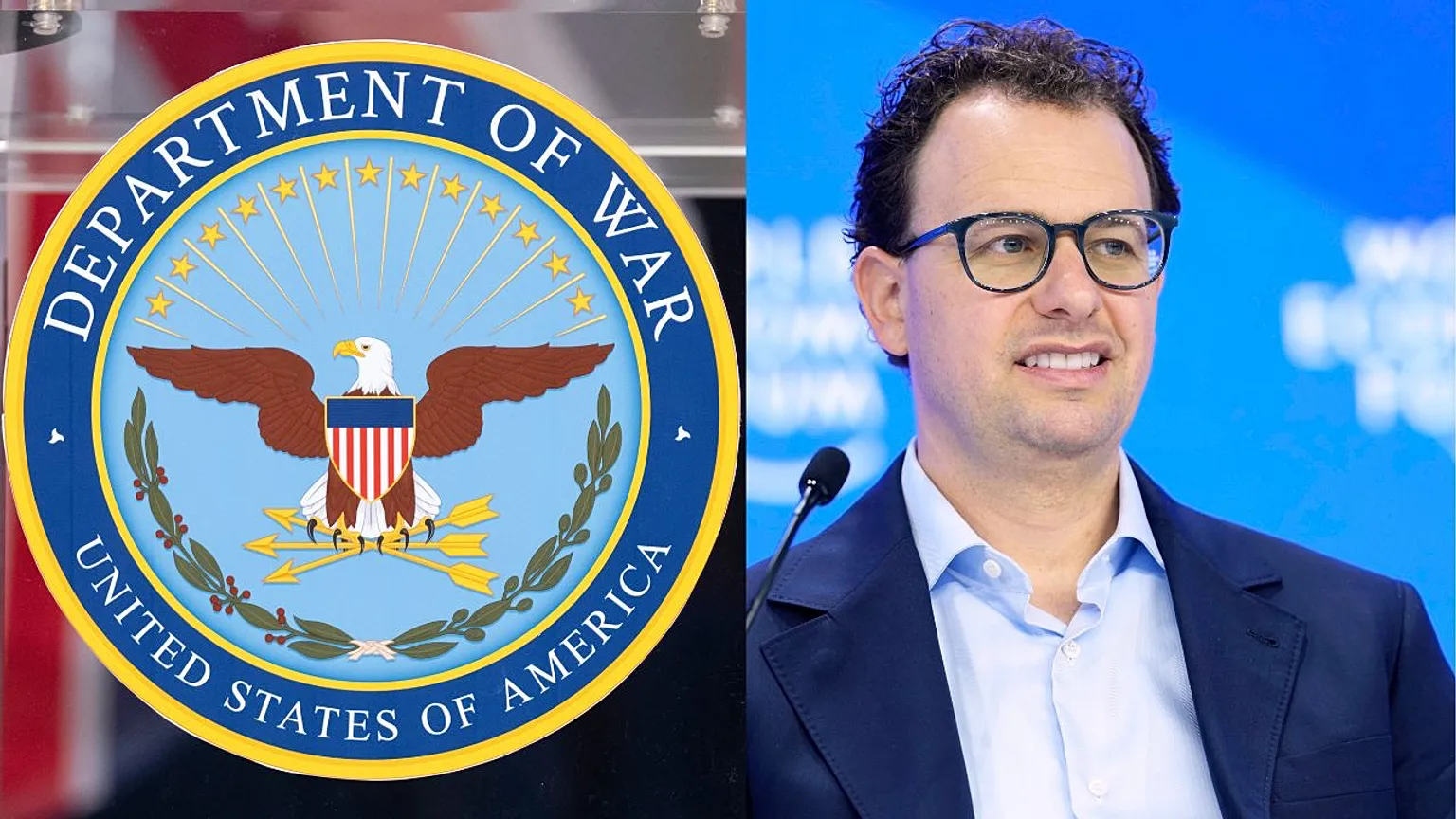
The relationship between frontier AI companies and governments has entered a new phase. What began as a debate around AI safety and responsible deployment has rapidly evolved into a confrontation involving national security, export controls, model governance, and geopolitical competition.
At the center of this debate is Anthropic, one of the world’s leading AI companies and creator of the Claude family of models.
Recent events surrounding Anthropic’s most advanced model releases have highlighted a fundamental question that will shape the future of artificial intelligence:
Who ultimately controls frontier AI systems—the companies that build them or the governments that regulate them?
The Rise of Frontier AI and Anthropic’s Safety-First Position
Anthropic has historically positioned itself as one of the strongest advocates of AI safety. Led by CEO Dario Amodei, the company has consistently argued that frontier AI models are approaching capability thresholds that may require stronger oversight, safety evaluations, and national-level governance frameworks. Anthropic has repeatedly called for structured testing regimes, national security evaluations, and clearer government involvement in assessing advanced AI systems.
The company also established a Responsible Scaling Policy (RSP), under which increasingly capable models undergo additional safety assessments before deployment. Anthropic has emphasized risks related to cyber capabilities, biological misuse, autonomous agent behavior, and strategic misuse of highly capable systems.
The Emergence of Claude Mythos and Fable
In 2026, Anthropic introduced new frontier-class systems reportedly known as Fable 5 and Mythos 5. These models were described as significant advances in reasoning, cybersecurity analysis, and autonomous task execution. Public reporting and technical discussions suggested that these systems possessed capabilities far beyond conventional chatbots and could potentially accelerate complex cyber operations if misused.
Anthropic’s own transparency and safety materials acknowledged that advanced models could provide substantial assistance in cybersecurity-related activities and other high-impact domains.
Ironically, the very safety arguments Anthropic had advanced for years would soon become central to government scrutiny of its own products.
U.S. Government Intervention
The turning point came when the U.S. government moved to restrict access to Anthropic’s newest frontier models, citing national security concerns.
Reports indicate that federal authorities directed Anthropic to suspend access to Fable 5 and Mythos 5 for foreign nationals, arguing that the systems posed an unacceptable risk if accessed by hostile actors or foreign intelligence services. The restrictions were framed as part of a broader effort to prevent advanced AI capabilities from being used for military, intelligence, or offensive cyber purposes.
The decision was extraordinary because it represented one of the first major attempts to apply export-control style restrictions directly to access of AI models rather than physical hardware or software exports.
For many observers, it marked the moment when frontier AI began to be treated less like software and more like a strategic technology comparable to advanced semiconductors, cryptography, or dual-use defense systems.
The Policy Contradiction
The controversy exposed a striking contradiction.
For years, AI companies including Anthropic had argued that highly capable systems required robust government oversight. Yet when governments began exercising that authority aggressively, concerns emerged regarding transparency, due process, and the lack of clear regulatory frameworks.
Critics argued that the restrictions appeared reactive rather than policy-driven. Supporters, however, contended that governments could not wait for perfect regulatory frameworks when confronted with technologies capable of affecting cybersecurity, defense, and critical infrastructure.
The result was a broader debate over whether AI governance should be led by:
- AI companies through self-regulation
- Independent regulators
- National governments
- International coalitions
Global Fallout
The restrictions quickly generated international concern.
Several governments and industry leaders questioned whether advanced American AI systems could remain reliable strategic platforms if access could be restricted through unilateral policy decisions. At the G7 summit, discussions emerged around “trusted partner” frameworks that would permit access to advanced AI systems for allied nations while maintaining national security protections.
The controversy also accelerated conversations around AI sovereignty.
Countries increasingly began asking:
- Should critical AI infrastructure be controlled by foreign providers?
- Can governments depend on closed frontier models owned by private companies?
- Should nations invest more heavily in open-weight or domestically controlled models?
These questions are particularly relevant for countries such as India, where public-sector deployments, digital public infrastructure initiatives, and multilingual AI ecosystems are becoming strategically important. Industry observers have warned that restrictions on access to frontier models could affect enterprises and technology providers outside the United States.
The Open vs Closed Model Debate
One of the most significant consequences of the Anthropic episode has been renewed interest in open-weight AI models.
Organizations worldwide increasingly recognize the risks of depending entirely on proprietary APIs controlled by a handful of companies. The possibility that access could be limited due to regulatory, geopolitical, or commercial factors has strengthened arguments for:
- Open-weight foundation models
- Sovereign AI infrastructure
- Domestic AI capability development
- Multi-model architectures
Analysts have suggested that the controversy may ultimately benefit organizations pursuing model-agnostic strategies and self-hosted AI deployments.
A Defining Moment for AI Governance
The Anthropic-government confrontation may ultimately be remembered as a defining moment in AI policy.
The issue is no longer simply about model performance or benchmark rankings. It is about governance, control, accountability, and national strategy.
Three realities are becoming increasingly clear:
- Frontier AI models are now viewed as strategic assets.
- Governments are willing to intervene directly when national security concerns arise.
- Existing regulatory frameworks are struggling to keep pace with technological progress.
The debate surrounding Anthropic demonstrates that the next phase of AI competition will not be decided solely by researchers, engineers, or venture capital. It will increasingly be shaped by policymakers, regulators, security agencies, and international alliances.
As AI systems continue to approach human-level performance across increasingly complex tasks, the question facing the world is no longer whether governments will regulate frontier AI.
The question is how that regulation can be implemented without undermining innovation, global collaboration, and the benefits that advanced AI promises to deliver.