“Professional knowledge builds careers, but character builds legacies.”
The world of Artificial Intelligence is advancing at an unprecedented pace. Every week introduces a new large language model, multimodal breakthrough, or autonomous AI agent. Young engineers and entrepreneurs are racing to master the latest frameworks, optimize inference pipelines, and build increasingly sophisticated AI applications.
Yet, amidst this technological revolution, one timeless question remains:
What truly makes a great leader in technology?
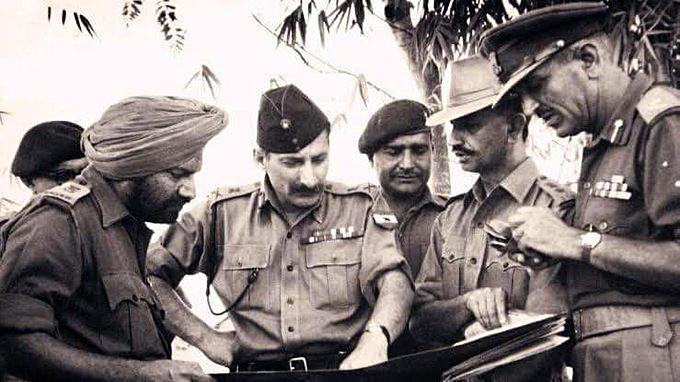
The answer may not be found in a research paper or an AI benchmark. Instead, it can be found in the life of one of India’s greatest military leaders—Field Marshal Sam Hormusji Framji Jamshedji Manekshaw, fondly remembered as Sam Bahadur.
Although he never worked with artificial intelligence, his leadership principles are remarkably relevant to today’s AI innovators.
Courage to Make Difficult Decisions
One of Sam Manekshaw’s defining qualities was his willingness to make difficult decisions, even under immense pressure.
During the events leading up to the 1971 Indo-Pak War, he advised delaying military action until the armed forces were fully prepared. Rather than yielding to urgency, he prioritized readiness, logistics, and planning. History showed that this disciplined approach contributed to India’s decisive victory.
The AI industry often faces a similar temptation to rush products to market.
Pressure to launch quickly can lead teams to overlook security, scalability, fairness, and reliability.
Young AI professionals should remember that shipping an unfinished model is not always innovation. Sometimes, the most responsible decision is to improve the system before deployment.
True leadership requires the confidence to choose quality over haste.
Master the Fundamentals Before Chasing Trends
Sam Manekshaw was known for his exceptional understanding of military strategy, logistics, and human leadership.
His confidence came from decades of disciplined preparation.
Similarly, many aspiring AI engineers spend countless hours comparing models:
- Claude or GPT?
- Llama or Mistral?
- Codex or Gemini?
While these tools are valuable, they are constantly evolving.
The foundations of engineering remain unchanged:
- Algorithms
- Mathematics
- System design
- Software architecture
- Distributed computing
- Problem-solving
AI tools amplify capability, but only strong fundamentals allow engineers to build reliable and impactful systems.
Technology changes. Engineering principles endure.
Lead People, Not Just Projects
Sam Bahadur understood that success depended on people.
He inspired confidence, respected every individual, and empowered his teams to perform at their best.
The AI ecosystem often celebrates models, GPUs, and benchmarks, but every breakthrough is ultimately built by collaborative teams.
Great AI leaders invest in:
- Mentoring young engineers.
- Encouraging diverse perspectives.
- Creating psychologically safe workplaces.
- Sharing knowledge openly.
Technology advances faster when people grow together.
Integrity Is Non-Negotiable
Perhaps one of Manekshaw’s most admired qualities was his integrity.
He spoke honestly—even when his opinions were unpopular.
As AI systems become more influential in healthcare, governance, education, finance, and justice, integrity becomes even more important.
Developers should ask themselves:
- Is this model fair?
- Is the data trustworthy?
- Are users informed about AI-generated content?
- Are privacy and security protected?
- Could this system cause unintended harm?
Responsible AI is not only about compliance—it is about professional ethics.
Stay Calm Under Pressure
Whether on the battlefield or in the boardroom, crises test leadership.
Sam Manekshaw remained composed during moments of extreme uncertainty.
The AI world presents its own pressures:
- Production outages
- Hallucinations
- Model failures
- Security vulnerabilities
- Scaling challenges
The best engineers solve problems methodically rather than reacting emotionally.
A calm mind consistently produces better technical decisions.
Learn Continuously
Military strategy evolves.
Technology evolves even faster.
One of Manekshaw’s strengths was his willingness to learn throughout his career.
AI professionals should embrace lifelong learning.
Today’s expertise may become outdated within a year.
Continuous improvement should include:
- Reading research papers.
- Building side projects.
- Understanding open-source models.
- Exploring new inference techniques.
- Learning from failures.
Curiosity is one of the greatest competitive advantages in AI.
Put Mission Above Recognition
Sam Manekshaw was committed to the mission rather than personal recognition.
The same mindset can transform AI development.
Instead of asking:
“How do I become famous?”
Ask:
“How can my work solve meaningful problems?”
India’s AI ecosystem has immense opportunities to improve:
- Education
- Healthcare
- Agriculture
- Governance
- Accessibility
- Language inclusion
Technology built with purpose creates lasting impact.
Think Long Term
Military campaigns are not won through isolated victories.
They require long-term planning.
AI development is no different.
Successful organizations focus on:
- Robust infrastructure
- High-quality datasets
- Secure deployment
- Responsible governance
- Sustainable innovation
Building durable systems is more valuable than chasing short-term hype.
Humility Enables Growth
Despite his achievements, Sam Bahadur remained approachable and grounded.
In AI, humility is equally important.
No engineer knows everything.
No model solves every problem.
The willingness to accept feedback, learn from peers, and acknowledge mistakes accelerates personal and professional growth.
Humility transforms talented developers into exceptional leaders.
The Future Needs Character as Much as Intelligence
Artificial Intelligence will continue to reshape industries, economies, and societies.
Models will become faster.
Reasoning will improve.
Autonomous agents will become more capable.
But no algorithm can replace qualities such as courage, integrity, empathy, discipline, and vision.
These are the traits that define enduring leadership.
Field Marshal Sam Manekshaw demonstrated that great leaders are not remembered solely for their victories, but for the values with which they achieved them.
As India builds the next generation of AI innovators, researchers, entrepreneurs, and policymakers, his example offers a powerful reminder:
Build intelligent systems.
But more importantly, build character.
Because technology may transform the future—but it is character that determines whether that future benefits humanity.
Young minds entering the AI revolution often focus on mastering the latest models and frameworks. While technical excellence is essential, lasting success demands something deeper: principled leadership.
The legacy of Sam Manekshaw teaches us that preparation, courage, integrity, humility, and commitment to a larger purpose are timeless qualities that transcend professions.
In the years ahead, India will not only need world-class AI engineers—it will need AI leaders who combine technical brilliance with ethical responsibility.
That may well be the greatest lesson Sam Bahadur leaves for the AI generation.